
Solar Energy Canopy
A canopy structure with rooftop photovoltaic panels, designed to provide shade while supporting on-site power generation.
Sharjah Media City (SHAMS) · Sharjah, UAE
SOLAR DOME · DESERT SOLAR PALACE
A connected concept bringing solar energy, climate management, water systems and intelligent controls together in one adaptable environment.
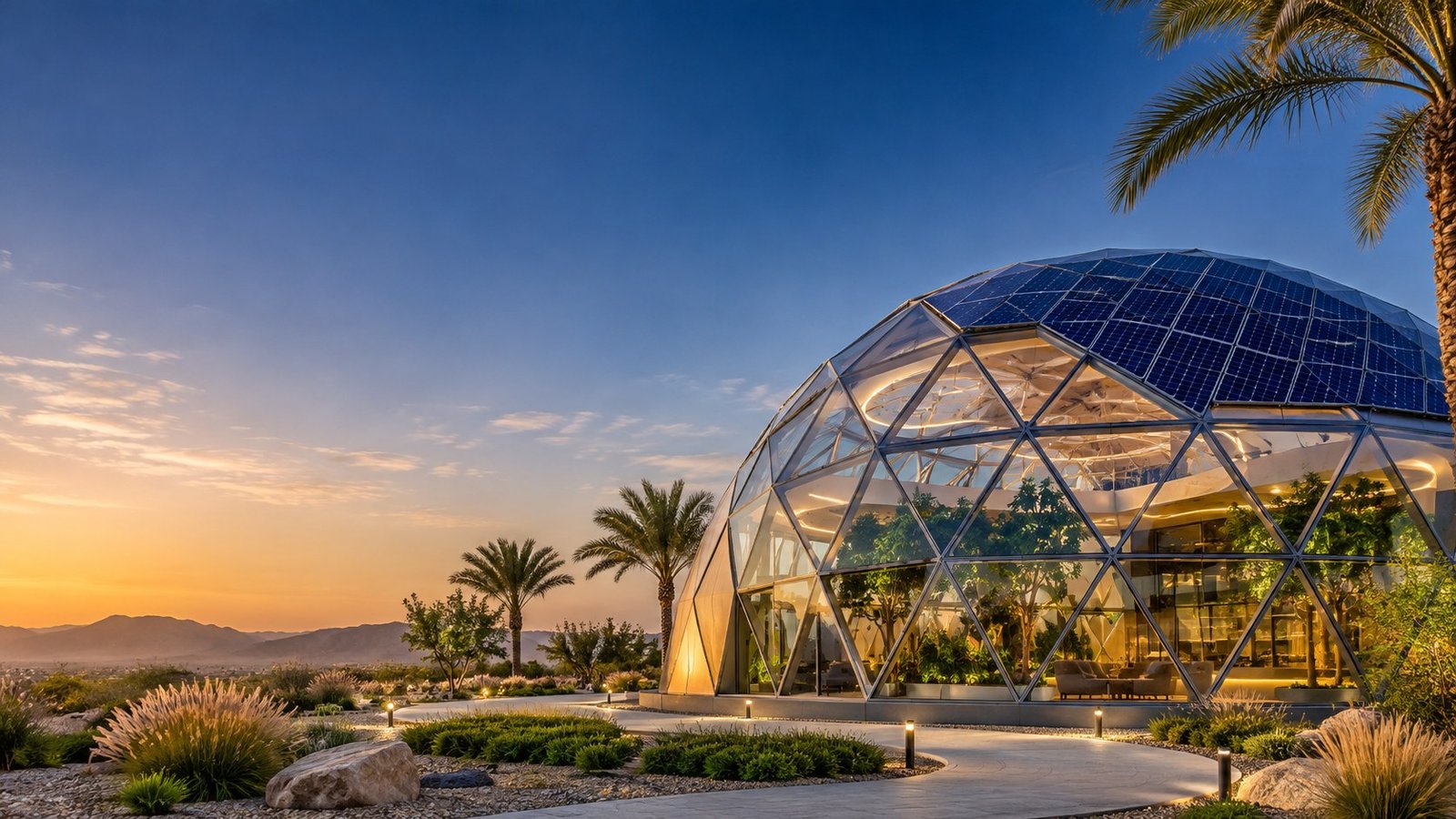 Illustrative Solar Dome concept image
DESERT SOLAR PALACE · SMART CLIMATE OASIS
The Desert Solar Palace concept brings together modern architecture and a collection of energy, water, air-quality, security and home-control systems. It is intended for challenging environments, including desert locations where heat, evaporation, water availability and comfort need to be considered together.
The product material describes an integrated approach combining photovoltaic power generation, solar water heating, solar lighting, energy-efficient windows and doors, air cleaning, intelligent controls, energy storage, reverse-osmosis water purification, automated rainfall and solar cooking.
The aim is to create a more comfortable, controlled indoor and outdoor setting with opportunities for greenery, shaded spaces and a managed microclimate.
The systems below are drawn from the Solar Dome product information on Smaster’s existing website. Final configuration, specifications, performance, supplier availability, pricing, installation scope and approvals must be confirmed for each site and project.
INTEGRATED SYSTEMS
The original product page describes a combination of energy, climate, water, comfort and security features. The final selection depends on project requirements.
A canopy structure with rooftop photovoltaic panels, designed to provide shade while supporting on-site power generation.
Controls for selected wind, rainfall and cooling functions, with remote operation described in the source product material.
Photovoltaic generation and an energy-storage arrangement intended to support selected lighting, monitoring and equipment loads.
A solar thermal water-heating system described for domestic hot-water requirements, including kitchen and bathroom use.
Water-saving bathroom components and a three-stage septic treatment arrangement are listed among the system options.
Window and door systems intended to contribute to the building envelope and support comfort in dusty or hot environments.
Remote monitoring and operation of selected systems such as lighting, power, hot water, security and water management.
A solar cooking option described for food preparation using concentrated solar heat, subject to product configuration and operating conditions.
Ventilation and air-purification options intended to support indoor air quality and the indoor environment.
Options described include video monitoring, alarms, access control, patrol functions, intercom and environmental monitoring.
Air-purification equipment is included in the source material as part of the proposed indoor environmental system.
Reverse-osmosis water treatment options are described for domestic, irrigation and other suitable water uses, subject to testing and compliance.
Solar-powered lighting options for the canopy, landscape and selected areas of the site.
Water-treatment and reuse concepts intended to help make use of available water sources within a managed site.
A constant-temperature outdoor swimming pool is listed as an optional comfort feature in the product material.
HOW THE CONCEPT WORKS
The source page highlights a number of linked systems. These summaries retain its main themes without assuming every feature is included in every configuration.
The canopy is described as a roof-level structure with solar panels. It is intended to provide shade and support electricity generation. The source material also describes the potential to reduce direct exposure and evaporation beneath the canopy, with a rainfall system as an optional climate feature.
The concept includes controls for selected climate functions, including rainfall and cooling. The original page describes remote operation through a mobile phone and the possibility of adding outdoor air-conditioning in terrace or open areas, depending on the design.
Photovoltaic generation and storage are presented as a way to use solar electricity for selected systems such as lighting, monitoring and equipment, with stored energy available when generation is lower. Capacity and actual loads require project-level design.
The product material describes solar water heating, reverse-osmosis purification, reclaimed-water treatment and water-saving sanitation. The appropriate treatment process and water quality depend on the source water, intended use and applicable standards.
Remote monitoring is described for selected systems, including electricity, hot water, canopy lighting, fresh-air functions, security and water-related equipment. Security options include monitoring, alarm and access-control functions.
The source page also lists a portable solar kitchen, ventilation and air-purification options. Selection depends on the intended use, local conditions, equipment specifications and safety requirements.
SOLAR DOME COVERAGE FOR FARMS
The existing Solar Dome page describes potential farm applications where shade, energy, water treatment and managed rainfall may be relevant. The intended configuration should be assessed against local climate, crop, animal and operating requirements.
Illustrative concept image · actual farm layouts and systems depend on site design.
POTENTIAL APPLICATIONS
The existing product page lists a range of possible settings. Each application requires feasibility, design, engineering and regulatory review.
Shaded and managed environments for animals.
Agricultural and irrigation-related applications.
Integrated shade, energy and climate concepts.
Site concepts for demanding hot and arid conditions.
Potential applications around stadiums and sports spaces.
Shaded areas and selected community facilities.
Visitor and destination concepts in suitable locations.
Hospitality spaces and guest amenities.
Residential settings where site and design conditions allow.
EXPLORE THE PRODUCT MATERIAL
Share your intended application, project location and the systems you would like to explore. Product details, technical specifications, supplier arrangements and availability can then be reviewed.